

It’s important but hard
We’ve all been or we will be early career professionals. A time where working long hours and laying foundations for a successful career will dominate our days more than anything else in our lives.
When we put in the work and invest in gaining relevant work experience, regardless of the timelines or challenges that come along the way, career success is almost guaranteed.
However, it’s also true that we may suffer from excessive stress, experience broken relationships, sacrifice our health and wellbeing amongst other things. That’s why keeping an active lifestyle is equally as important as career success in this period.
When you keep both your mind and body active, you’ll become more productive, reduce the risks of chronic diseases, increase the chances of living longer and many other benefits.
Knowing this and actually taking consistent steps to maintain such a lifestyle are two different things. Below are a few simple but effective steps you could make to start enjoying a consistent active lifestyle.
1. Joining sports clubs & community activities
This is what most people typically think of when they hear about exercise and keeping an active lifestyle. Well it’s for good reason.
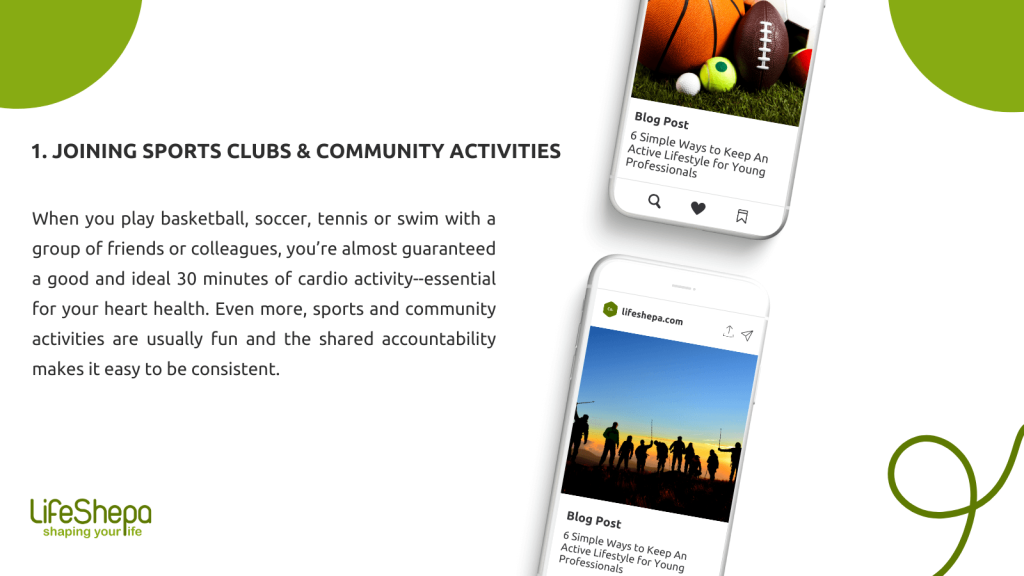
When you play basketball, soccer, tennis or swim with a group of friends or colleagues, you’re almost guaranteed a good and ideal 30 minutes of cardio activity; essential for your heart health. Even more, sports and community activities are usually fun and the shared accountability makes it easy to be consistent.
For others, gym membership is the preferred option. Whether it’s a zumba dance session, scheduled running marathons, hiking, walking or others–participating with your family, friends or workmates is one straightforward way of getting started with an active lifestyle.
2. Scheduling exercise & rest days
One common stumbling for many whenever they start exercising is the idea that you’d have to do it every single day. It’s quite hard but if you can, that would certainly be encouraged.
But you can also get results by building a routine and sticking to it. You may initially decide to exercise three times or only twice a week, and if you do it consistently, you’ll also get results. With time you could then decide to increase the frequency or intensity.
The most important thing is getting started and remaining consistent.
3. Doing home chores
This is one underrated yet useful avenue to start being active. Ever noticed how tired you feel after doing laundry, thoroughly cleaning your room, or even cooking? That’s because your body will be active and it’s exactly what we want.
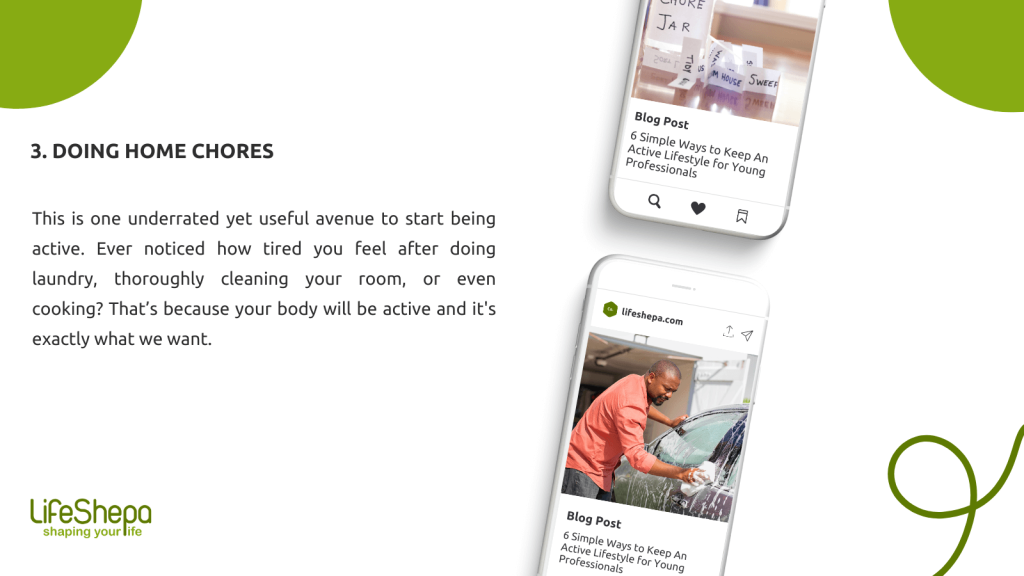
If you’re not ready for regular sports or exercise routines, you can start by washing your car or trimming your garden. As long as you start, you’ll most certainly improve and get better at it.
4. Expanding your social life
Sometimes we get so busy that we may not even see the sun for an entire week. Noble and admirable as it is, it’s not entirely wise.
If you’re an outgoing person, you should be encouraged to intentionally schedule some time to unplug and connect with friends. Ever noticed how you could feel energized and get your groove on when you meet new people or go clubbing with friends? That’s a good sign and all part of maintaining an active lifestyle.
If you’re not particularly outgoing, explore connecting with extended family members, peers at church or other social settings.
The key is always being intentional about expanding your social circle.
5. Rotating your commute
Depending on where and how you travel to work, it’s a good idea to try and include exercise routines.
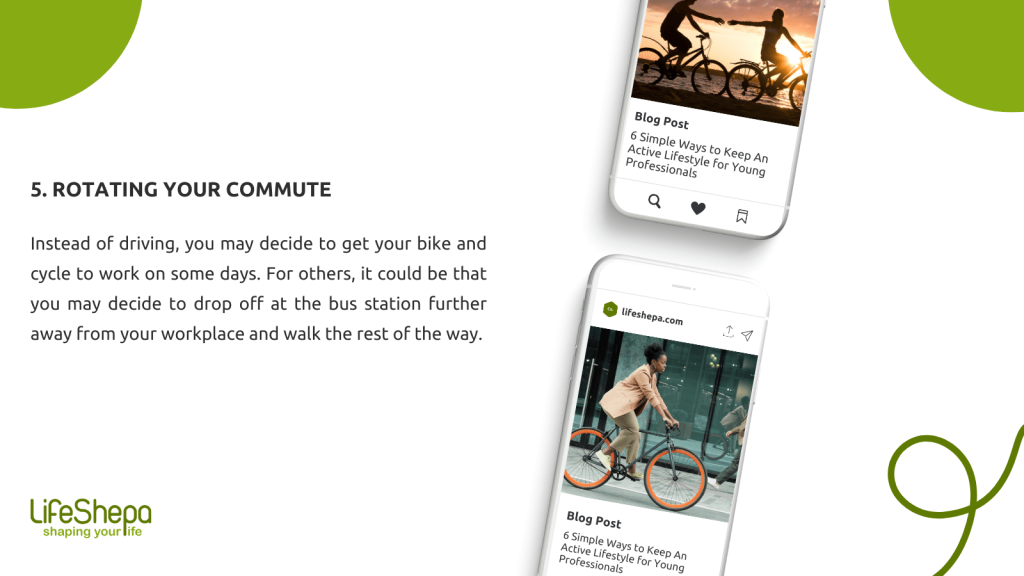
It could be that instead of driving, you may decide to get your bike and cycle to work on some days. For others, it could be that you may decide to drop off at the bus station further away from your workplace and walk the rest of the way.
If you aren’t keen to shower at work, you may just do the same on your way back home.
6. Watching what and how you eat
Unlike the demanding practice of dieting, watching what you eat means deciding to eat more of foods which give more energy and less empty calories. ‘Junk foods’ such as snacks, processed meats and frozen foods usually just give you empty calories that make you feel full for a short period before dragging you back into snacking. This can affect your mood, energy levels and increase your blood sugar levels in the long term.
As you start an active lifestyle, you’d want to take more unprocessed foods which leave you feeling fuller for longer such as oatmeal for breakfast, boiled eggs over fried ones or boiled potatoes over fries among other options.
How you eat is also as important as what you eat. Ensuring you take breaks from snacking between your meals is highly essential as it gives your body the time to burn excess fats before having to digest more food. It’s not so much about the time of the day you eat but how long you take before having your next meal. The longer the time periods between meals, the better.
Laying a strong foundation for the rest of your days
Getting into the habit of keeping an active lifestyle is crucial at this stage as it sets you up for life. It gets much harder to do the same when you have a family or added responsibilities, hence it’s better to start now.