
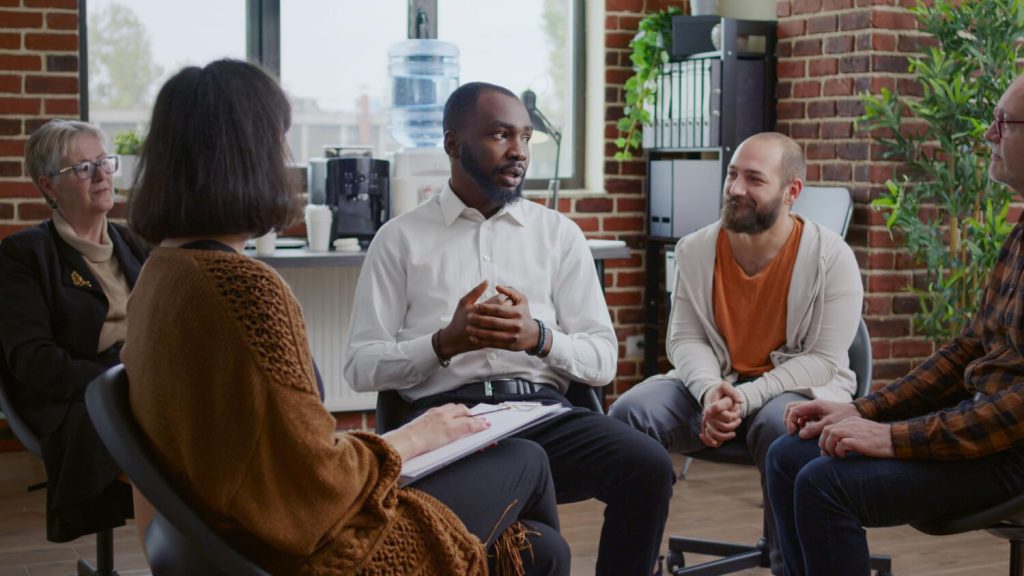
All across the world, and particularly in Africa, a generation of promise and purpose is under threat of extinction.
Africa’s booming youth population has been for long earmarked as the potential driver of prosperity and realization of the continent’s immense potential. Apart from other challenges of our times, drug and substance abuse pose a serious threat to sabotage this generation and Africa’s future as a whole.
But how do we stop it? A conversation about this vice is certainly not easy or simple as billboards and placards that say, ‘stop drug and substance abuse.’ With so many nuances, it remains a conversation we must all have.
We can start here, with the following five talking points.
1. Seeing beyond the stigma
More often than not, people involved in drug and substance abuse are vilified. Because of the stigma, even the well meaning people and elders of our society usually encourage us to stay away from them.
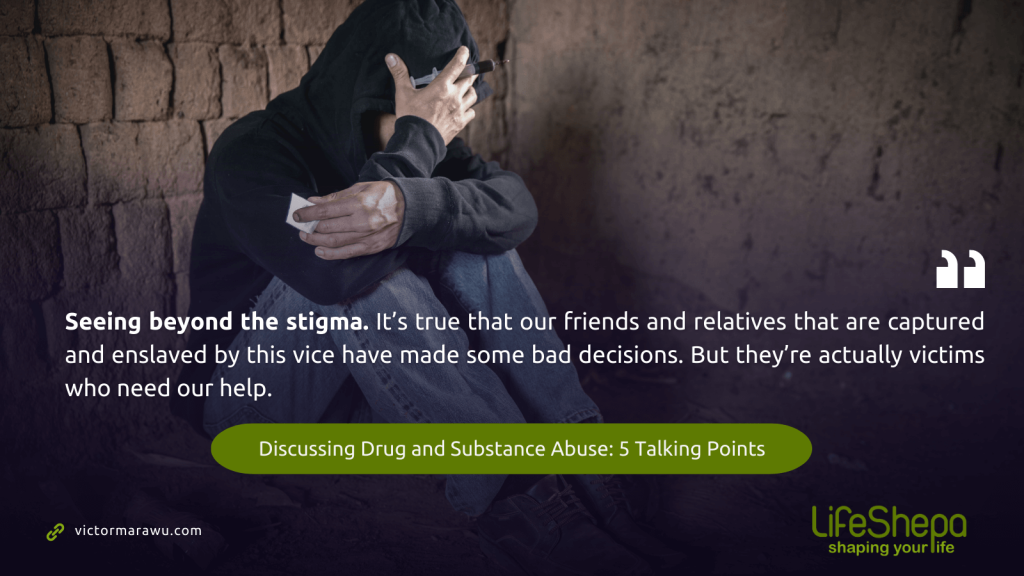
But that’s not the full picture. It’s true that our friends and relatives that are captured and enslaved by this vice have made some bad decisions. But they’re actually victims who need our help.
Until we start seeing them as such, it’ll be almost impossible to adequately help.
2. The power of inclusion
Because of the above stigma, they’re often relegated to the confines of our society or rather relegate themselves. They’re given all these black-sheep labels that seek to define them as permanent failures in life.
We know of a 26-year old young man who sadly took his own life. At the funeral, his friends whom he shared drugs and substances with lamented as to how his own family never loved him. He didn’t feel invited to simple family gatherings and had been excluded from ordinary privileges that come with being a part of the family. On some worse days, his father would even beat him.
Though not simple, the ultimate goal should be to make the victims of drug and substance abuse feel they’re still human. And that they belong.
3. Seeking and providing early help
As with many forms of abuse and addiction, early detection and intervention is the best remedy.
If you find yourself seeking more than is recommended when it comes to alcohol, substances or drugs; challenge yourself to seek professional help. Parents and guardians also need to understand that at times you’re not best positioned to provide that help.
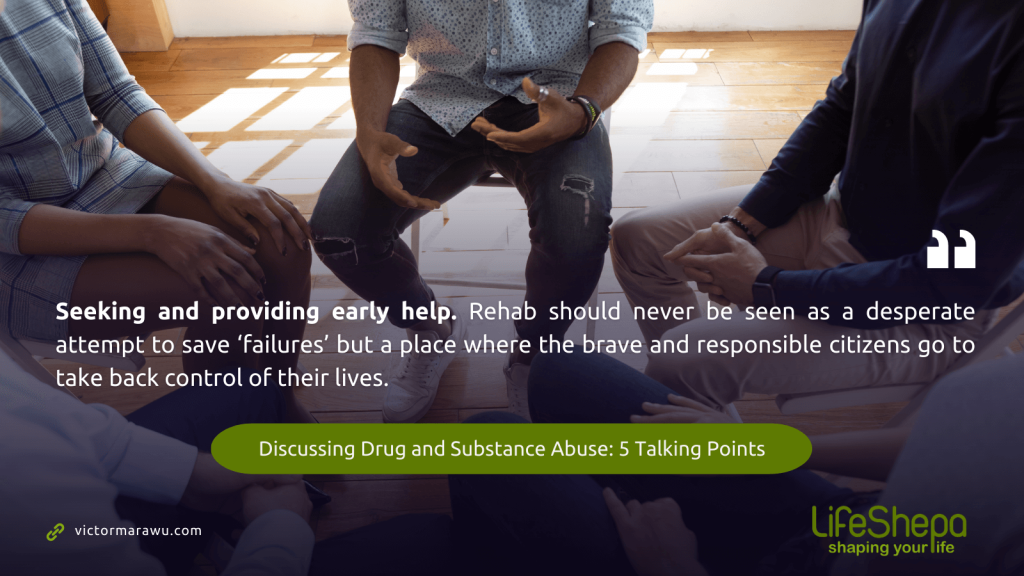
Rehab should never be seen as a desperate attempt to save ‘failures’ but a place where the brave and responsible citizens go to take back control of their lives.
4. Dealing with the real problem not symptoms
Raising awareness about drug and substance abuse is crucial. But if it were as easy as flipping the switch, many would have stopped when they saw the ‘stop drug abuse’ banners.
Victims of these vices usually know they aren’t in a good place. We must all understand that addiction and abuse of drugs and substances are all but symptoms of other problems.
These could range from heartbreak, emotional and physical abuse, depression, neglect and many others. Without designing safe spaces to have healthy conversations with the victims, we may never understand or see them as we should.
This leads us to the last point.
5. Replacing pleasures
Because of the pressures and underlying problems referenced above, drugs are usually then seen as an escape by the victims.
They provide moments of pleasure that they chase to mask what they’d be dealing with.
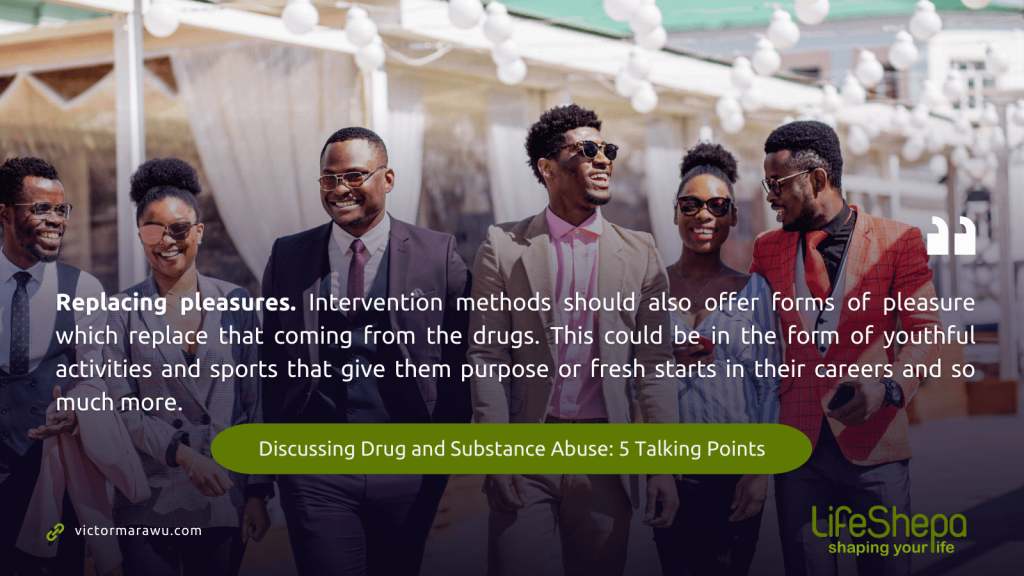
It therefore follows that our intervention methods should also offer forms of pleasure which replace that coming from the drugs. This could be in the form of youthful activities and sports that give them purpose or fresh starts in their careers and so much more.
That’s why rebuking and beating could never help stop drug and substance abuse.
Start having those conversations
Understanding that addiction and abuse is a symptom of other problems, replacing pleasures, seeing beyond the stigma, inclusion and providing early help doesn’t make you an intervention expert.
It however gives you the right mindset to start having these conversations to help our generation. Professional help must still be sought for all.